St Mary'sC of E Primary School

English
At St Mary’s, we promote high standards of language and literacy by linking learning across different subjects where appropriate. Reading is a challenging process that requires children to use their background knowledge to understand texts. By connecting English lessons with the wider curriculum, we help children build this knowledge so they can better understand what they read and the world around them.
We also place a strong focus on developing vocabulary. We believe that fostering a love of language is essential for children’s success both in school and in later life.
You can find out more below about how we learn each aspect of English.
Spoken Language
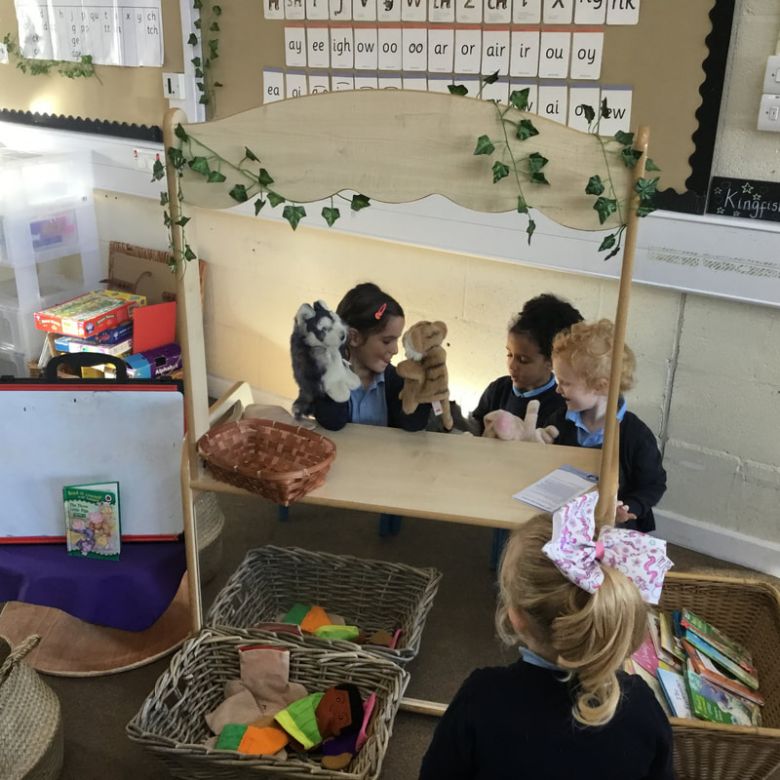
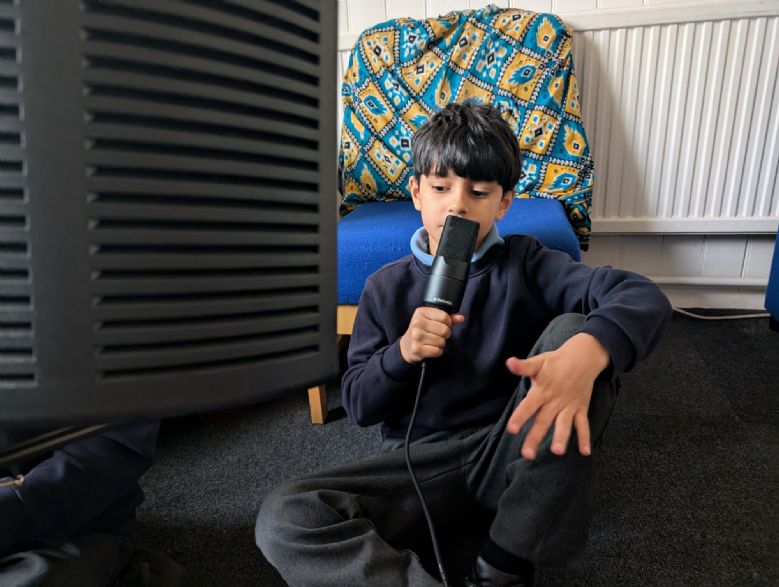
At St Mary’s Spoken Language is an integrated part of our behaviour for learning and as a tool for communication. We use the National Curriculum Statutory requirements to plan from and as a school we have identified the following strands as focus areas;
Listening
- St Mary’s children are encouraged to be active listeners and speakers and use their words to communicate their feelings, knowledge and areas of learning which they have not understood.
- We teach children what good listening involves, and good listening prompts are displayed in every classroom.
Asking questions
- We model the use of recall questions and use open-ended questions (especially using a think aloud strategy in Guided Reading) to support children in the asking of their own questions to deepen their understanding and knowledge across the curriculum.
Vocabulary
- We actively teach tier 2 vocabulary and do not assume that children are familiar with what is being discussed.
- Project vocabulary is part of the spelling provision across Key Stage 1 and 2
Give well-structured descriptions, explanations and narratives for different purposes
- The children use colourful semantics to structure their sentences, story maps and text skeletons to organise their ideas for oral presentations.
Reading
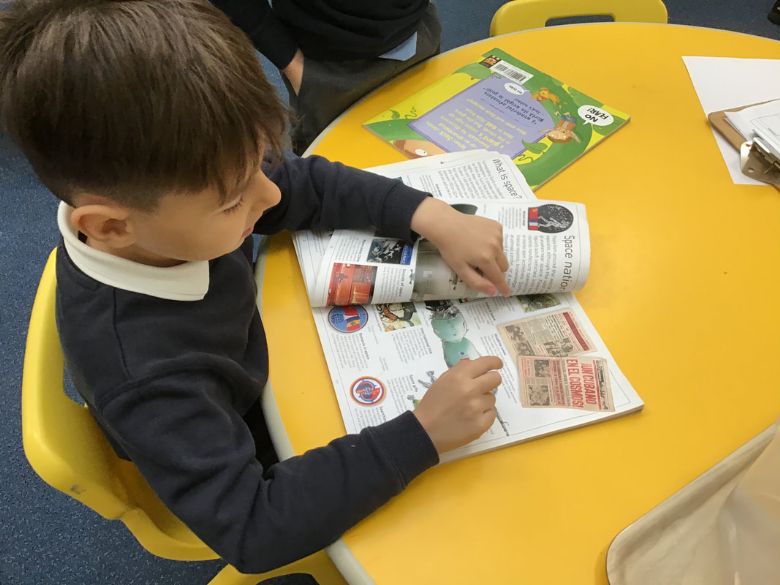
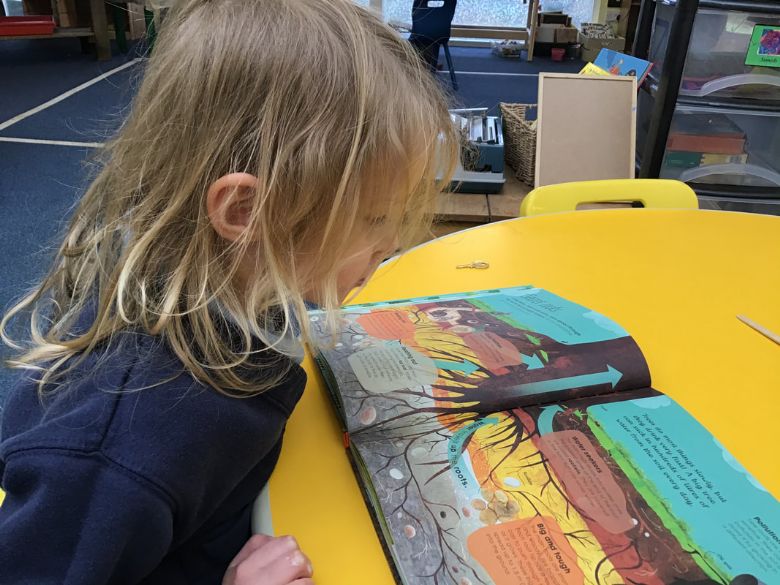
Reading is a golden thread in our curriculum; reading enables children to make sense of the world they live in and to extend their knowledge about specific aspects of the projects they are undertaking. Texts are chosen to ensure children experience a wide variety over time, broaden vocabulary and understanding of grammar and allow children to experience reading as a pleasurable experience which underpins all their learning across the curriculum.
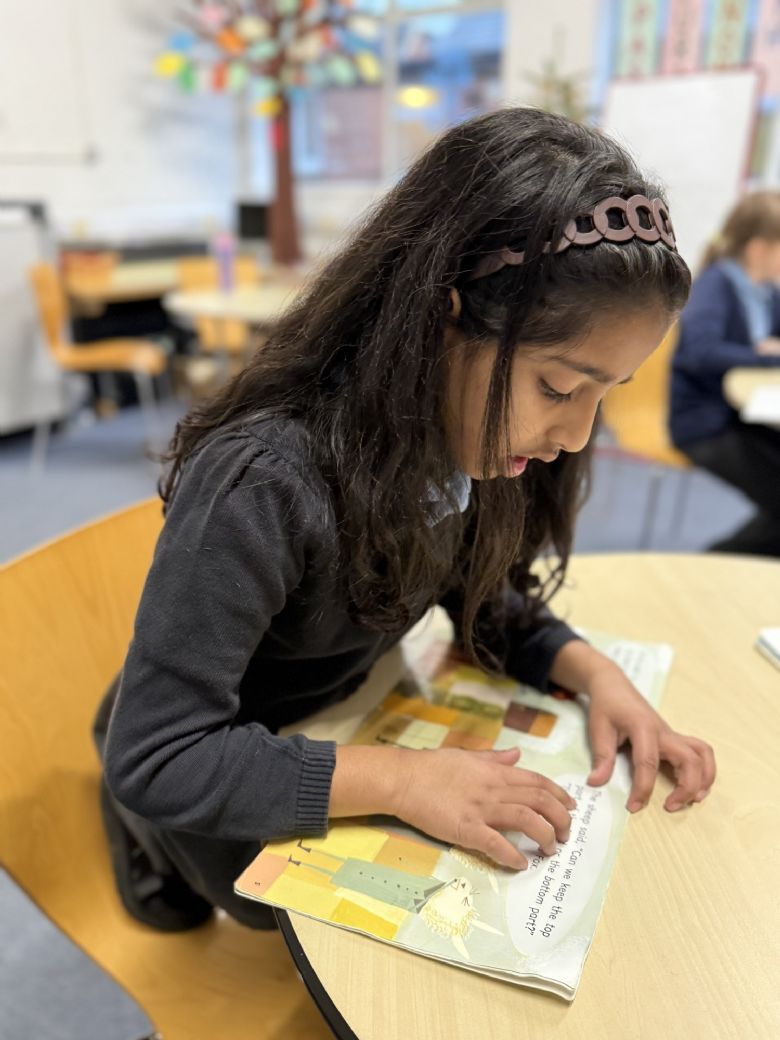
Early Years Reading
On entry to school early years begins with a focus on environmental print; including logos/text types/fonts/handwritten and typed with the intention of getting children to perceive themselves as a reader both in school and out of school.
Class texts are read at least daily and repeated to allow children to build fluency and understanding of the vocabulary across a range of genres. Stories are introduced using puppets and visual aids. Use of the Tales Toolkit helps children to understand how stories are structured and helicopter stories are used to explore character, setting and develop imagination.
Phonics: Read, Write, Inc
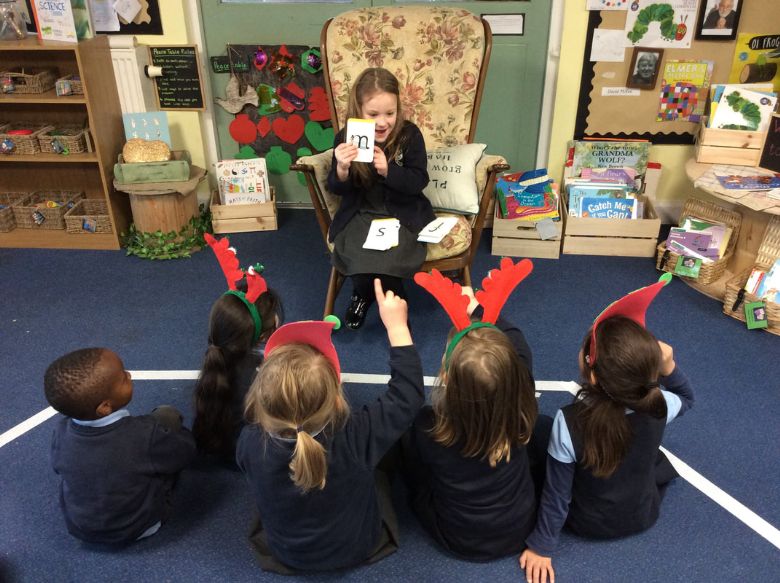
We want children to become confident readers and to enjoy reading. To help children start reading as quickly as possible, we begin in Reception by teaching them how to read sounds and recognise how these sounds are written. Mnemonics are used to support letter formation, and short stories help children remember each sound.
Once children have learnt words linked to a new sound, they practise reading them regularly to build speed and fluency. Children also learn to read and spell red words throughout the programme. Red words, such as said, the and my, have tricky parts. Children are taught to sound out the word and then identify the tricky part.
Children take home fully decodable books that are familiar to them, helping them feel confident when reading at home.
At the end of each half term, all children are assessed on how accurately and fluently they read, as well as which sounds they have secured. This information is used to place children in the most suitable reading group. Children who make good progress may move groups, while those who need extra support receive one-to-one or small group teaching from a trained Read Write Inc staff member.
Phonics support continues for as long as a child requires it. Parental workshops to support early reading and phonics learning are delivered annually.
Guided Reading
Each week, the children at St Mary’s in Key Stage 1 and 2, undertake a carousel of activities to develop comprehension;
|
Pre read
|
Guided session
|
Follow up task
|
Comprehension skills
|
Vocabulary skills
|
|
Familiarity/ Vocabulary focus linked to the text
|
Specific reading skill to be taught.
|
Apply/use skill that has been taught in Guided session.
|
Texts that children can read independently and tasks to support comprehension.
|
Growing Tier 2 and 3 vocabulary
|
Central to the carousel is a guided read with the teacher that focusses on comprehension rather than decoding (although for non-fluent readers this continues to be aspect that receives attention).
These guided sessions include the following strategies;
- Predicting - making a logically plausible guess as to what will happen next.
- Questioning - asking questions about the text to expose different layers of meaning.
- Clarifying - Checking how specific words and phrases have been understood.
- Summarising - Stating the main events, actions, or ideas in the text.
- Thinking aloud - Reading a few sentences or a paragraph and verbalising what has been understood. (teacher and pupil think aloud)
- Noting the text structure - Highlighting the main linguistic features of a specific text-type.
- Visualising - Developing a visual image of the text (story mapping)
Guided reading groups are monitored, assessed and adjusted to ensure that the children are in the appropriate group.
Children who find reading difficult are supported throughout school with additional 1:1 support (for some this involves reading with a volunteer) and group interventions to ensure they make progress and enjoy reading for pleasure and obtaining information to support their interests and learning.
Children in KS2 who are not reaching Age Related Expectations are assessed using SALFORD reading tests to track progress (reading ages).
Reading at home
We recommend that the children regularly read at home as it is a great way to encounter a wide range of authors and genres. It will also allow them to understand and use a wide range of vocabulary. They should aim to read on at least four occasions in any one week for a minimum of 10-15 minutes at a time.
In EYFS, children take home a book that has been chosen by the children to enjoy reading at home. RWI books are also sent home to support word and sound recognition and start the journey of good reading habits. There is a ‘Going home’ library that children and parents can select from at any time.
In Year 1 children will be given a fully decodable text based on the sounds that they have already learnt. From Year 2 onwards, children will select a book (supported by the St Mary's team) to enjoy in school and at home. Parents will be asked to read with their children and record their reading in their child’s reading diary four times a week. Teachers will collect reading records weekly to ensure that regular reading is taking place. If a child is not reading regularly at home, we will contact parents to offer support.
Promoting a love of texts
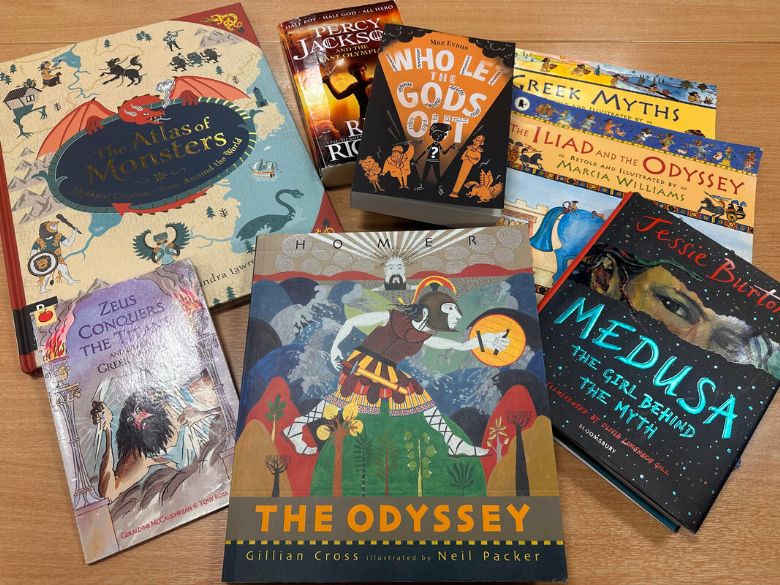
We have implemented a range of strategies to promote reading for pleasure;
- Birthday books; families are invited donate a book that can be read by members of the class to celebrate their child’s birthday. This could be a picture book, information book, a collection of poems or a much loved story.
- Story telling weeks
- World Book Day celebrations
- Book swaps
Writing
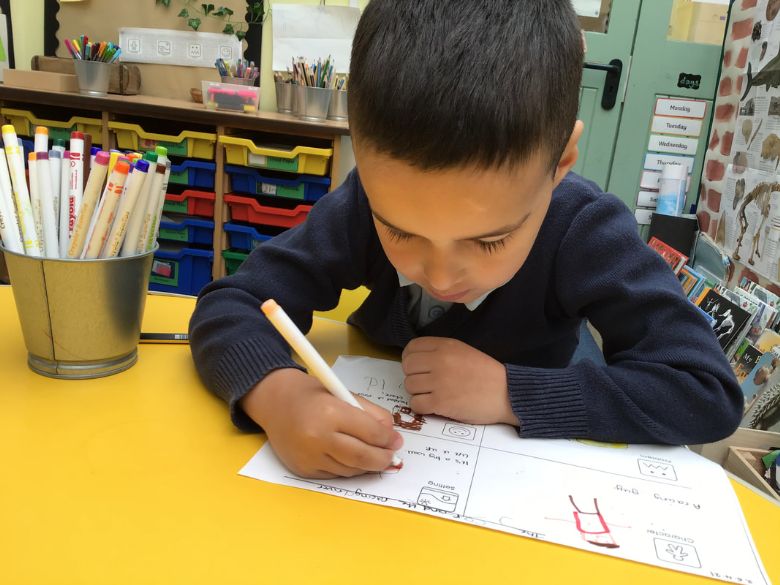
We engage children with the writing process by using a wide variety of films and texts. The children undertake a series of lessons that develop the writing process.
The writing foci for each term will be linked to the long-term planning document and covers the full range of genres during a child’s time within each phase. The writing is linked to a core text and children participate in a range of mini-writes before writing a final piece.
Grammar Punctuation and spelling
Grammar and punctuation are taught discreetly and within English lessons. Spelling is taught weekly, and the words are sent home for children to practise. The spelling patterns are revisited and built upon throughout a child’s time at St Mary’s. The children in Key Stage 2 use the spellings in weekly dictation sentences.
Handwriting
Our handwriting curriculum (Cambridge Penpals) is designed in line with the national curriculum requirements, ensuring that children understand which letters belong to specific handwriting families and are given regular, structured opportunities to practise these. This approach is essential, as incorrect letter formation can quickly become habitual and difficult to correct. We recognise that effective handwriting instruction requires explicit modelling; therefore, teachers clearly demonstrate how letters are formed. Through high-quality demonstration and consistent practice, pupils develop accurate letter formation, fluency, and confidence in their handwriting.
Progression Documents